
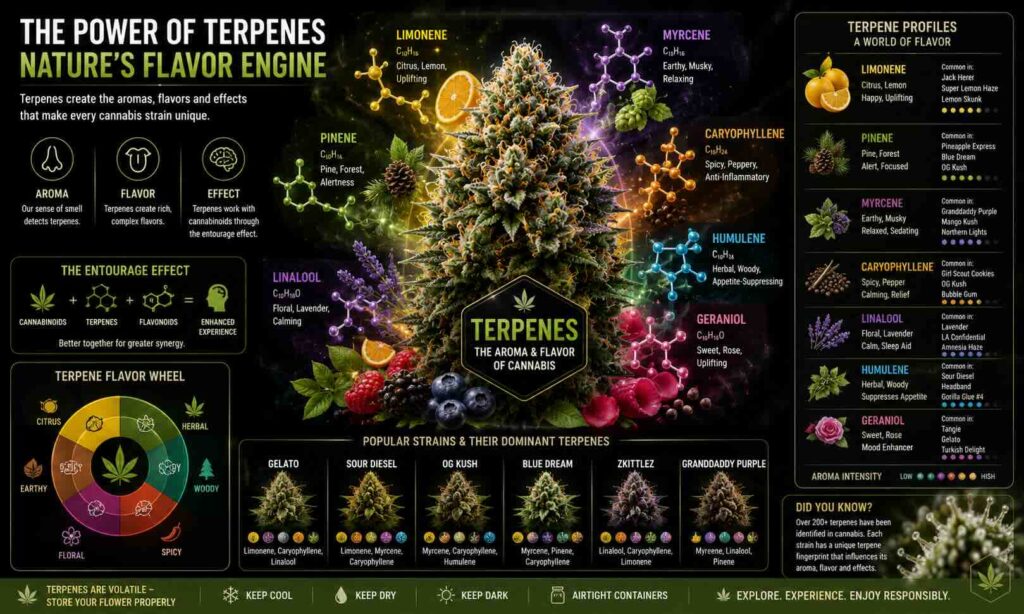
Terpenes are among the most fascinating compounds found in cannabis. These aromatic molecules are responsible for the distinctive scents and flavors associated with different cultivars, but their importance extends far beyond aroma alone. Modern breeding programs place significant emphasis on terpene development because these compounds contribute to the uniqueness and identity of a genetic line. Understanding how genetics influence terpene production provides valuable insight into cannabis breeding and cultivar selection.
While environmental conditions can affect terpene expression, genetics remain the primary factor determining a plant’s terpene potential. Every cultivar carries a genetic blueprint that influences which terpenes are produced and in what relative proportions.
What Are Terpenes?
Terpenes are naturally occurring compounds found throughout the plant kingdom. They contribute to the aromas associated with flowers, fruits, herbs, and many other plants. In cannabis, terpenes create the distinctive scent profiles that help differentiate one cultivar from another.
Hundreds of terpene compounds have been identified in nature, and cannabis can produce a diverse combination of these molecules. The specific terpene profile of a cultivar helps shape its overall aromatic character and contributes to its uniqueness.
This diversity is one reason why cannabis breeding remains such an active and innovative field.
Each cultivar expresses its own combination of aromatic characteristics.
The Genetic Foundation of Terpene Production
Genetics play a central role in determining terpene expression. The genetic makeup of a plant influences which terpene-producing pathways are available and how strongly they are expressed during development.
When breeders select parent plants, terpene characteristics often become an important consideration. Plants displaying desirable aromatic profiles may be incorporated into breeding projects with the goal of preserving or enhancing those traits in future generations.
Over time, repeated selection can help stabilize terpene profiles and improve consistency across a cultivar. This process requires patience and careful evaluation.
The strongest terpene profiles often result from multiple generations of refinement.
How Breeders Select for Terpene Traits
Modern breeding programs frequently evaluate aroma and terpene expression alongside other important characteristics such as structure, vigor, and stability. By selecting plants that consistently display desirable aromatic qualities, breeders can gradually strengthen those traits within a genetic line.
This approach allows breeders to create cultivars with distinctive terpene profiles while maintaining overall cultivation performance. Selection becomes particularly important when working with large populations where natural variation may exist between individual plants.
Growers interested in exploring modern cannabis genetics can learn more through https://www.ministryofcannabis.com/fr/. Understanding breeding principles helps cultivators appreciate how terpene profiles develop over successive generations.
Careful selection remains one of the most effective tools available to breeders.
The Influence of Environment on Terpene Expression
Although genetics establish terpene potential, environmental factors can influence how those genetics are expressed. Temperature, light intensity, nutrition, humidity, and overall plant health may all affect terpene development during cultivation.
This interaction between genetics and environment helps explain why the same cultivar can display subtle differences when grown under different conditions. However, environmental factors generally influence expression within the limits established by genetics.
Strong terpene genetics provide the foundation upon which cultivation practices can build. Without the appropriate genetic potential, environmental optimization alone cannot create a complex terpene profile.
The relationship between genetics and cultivation conditions remains an important area of study.
The Future of Terpene-Focused Breeding
Interest in terpene diversity continues growing throughout the cannabis industry. Breeders increasingly recognize the value of preserving unique aromatic characteristics and incorporating them into future breeding projects.
Advances in analytical testing allow for more detailed evaluation of terpene profiles than ever before. These tools help breeders identify promising plants and make more informed selection decisions.
Additional information regarding cannabis culture and cultivation can be explored through https://www.weedside.story/category/culture/.
As breeding programs continue evolving, terpene-focused selection will likely remain a major area of innovation and genetic development.
Final Thoughts
Terpene profiles are heavily influenced by genetics, making them an essential consideration in modern cannabis breeding. While cultivation conditions contribute to expression, genetics determine the underlying potential that shapes aroma and flavor characteristics.
The continued study of terpene inheritance and expression will help breeders develop increasingly refined cultivars while preserving the diversity that makes cannabis genetics so remarkable.